We recently received an email from a former client who found himself stuck in a very common situation: a repair estimate dispute.
His seven-year-old luxury SUV was damaged in a minor accident. The dealer referred him to a high-end (highline) body shop, which prepared an estimate to restore the vehicle to factory specifications using all brand-new OEM parts. The problem? The insurance company’s estimate came in nearly 50% lower.
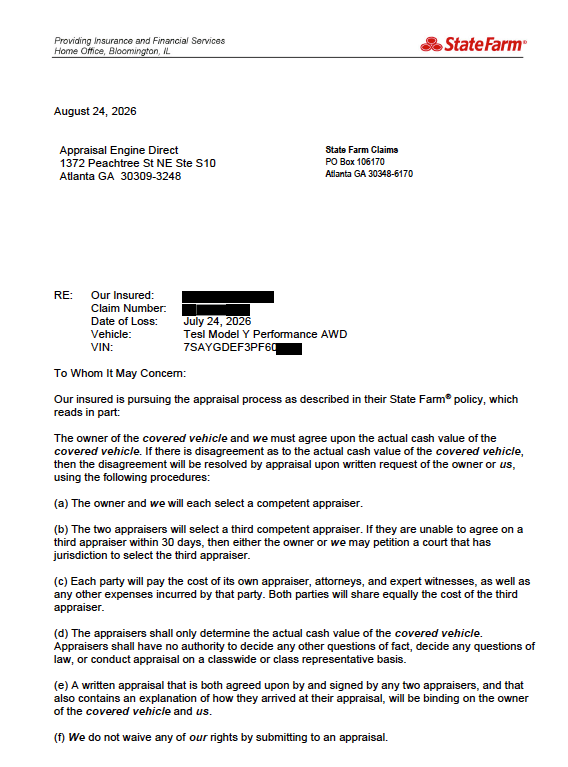
The client wanted to know whether invoking the Appraisal Clause could force the carrier to pay the shop’s higher price.
Although I’ve helped this client successfully in the past, I had to be honest. In this specific scenario, hiring an appraiser would likely not be the best financial decision.
Below is an insider’s breakdown of why—and, more importantly, when you should actually hire an appraiser for a repair dispute.
The “Like Kind and Quality” Hurdle
The biggest surprise for most vehicle owners is the LKQ (Like Kind and Quality) rule. Under most state regulations and insurance policies, if your vehicle is several years old, insurers are generally allowed to pay for used, recycled, or remanufactured parts.
If your repair shop insists on brand-new OEM parts for an older vehicle, but the insurer’s estimate is based on high-quality recycled parts, that price gap is not a “mistake.” It is a policy limitation.
In these situations, an appraiser often cannot “win” that money back, because the insurance contract explicitly allows the use of LKQ parts.

When Is a Repair Dispute Worth the Appraisal Fee?
The Appraisal Clause can be a powerful tool—but it works best when the dispute involves technical judgment and repair methodology, not simply a preference for new parts.
We see strong success rates and a solid return on investment when disputes involve:
- Specialty & Custom Vehicles
Vehicles with custom paint, wraps, aftermarket performance parts, or unique finishes that standard estimating software fails to account for. - Safety & Technology Procedures (ADAS)
Manufacturer-required electronic scans, calibrations, or one-time-use hardware that insurers frequently omit. - Structural Repair Complexity
Disputes over sectioning (cutting and joining structural components) versus full replacement of those components. - Subjective Line Items (Where Expertise Matters Most)
This is where an experienced appraiser can make a meaningful difference, including:- Set-Up and Pull Time: Necessary frame and alignment labor that insurers often under-allocate.
- Three-Stage Paint Blending: Complex paint processes that require significantly more labor than a basic color match.
- Diagnostic Research: Time required to research and follow manufacturer-mandated repair procedures.
The “Math” of a Repair Appraisal
For minor repairs on older vehicles, the numbers often don’t work in the consumer’s favor.
Our flat fee to write a repair estimate starts at $300. If we proceed to settlement, we charge an additional fee, with total fees capped at 25% of the increase in recovery.
If the difference between the shop’s estimate and the insurer’s estimate is only $1,500, our fee—combined with the potential cost of an umpire—can consume a significant portion of that increase. In those cases, the client’s net gain may be minimal.
I never want a client to spend more on an appraiser than they stand to gain in the repair.
Our Final Advice
If the dispute is simply new parts versus used parts, invoking the Appraisal Clause is unlikely to deliver the return you’re hoping for.
However, if the insurer is refusing to pay for required safety procedures, manufacturer-mandated processes, or specialized labor for a unique vehicle, that is where an independent appraisal can provide a substantial return.
The bottom line: If your insurer’s repair estimate feels light, don’t hire an appraiser immediately. Have a qualified professional review the line items first to determine whether the dispute is truly about parts—or about procedures.
That distinction makes all the difference.