Modern vehicles are packed with technology that most drivers never think about until something goes wrong. Cameras, radar sensors, ultrasonic modules, forward collision systems, lane departure warnings — all of it sits behind bumpers, inside windshields, and around door mirrors, quietly doing its job. Then a collision happens. The body shop fixes the visible damage and hands the car back looking perfect. What many Georgia drivers do not realize is that those ADAS repairs have created a financial problem that no amount of bodywork fixes: their car is now worth meaningfully less, and the insurance company is counting on them not to notice.
What ADAS Actually Is and Why It Changes the Repair Picture
Advanced Driver Assistance Systems, or ADAS, is the umbrella term for the suite of electronic safety and automation features now standard on most vehicles sold in the United States. If your car was built after 2018, there is a good chance it has at least several of these systems onboard.
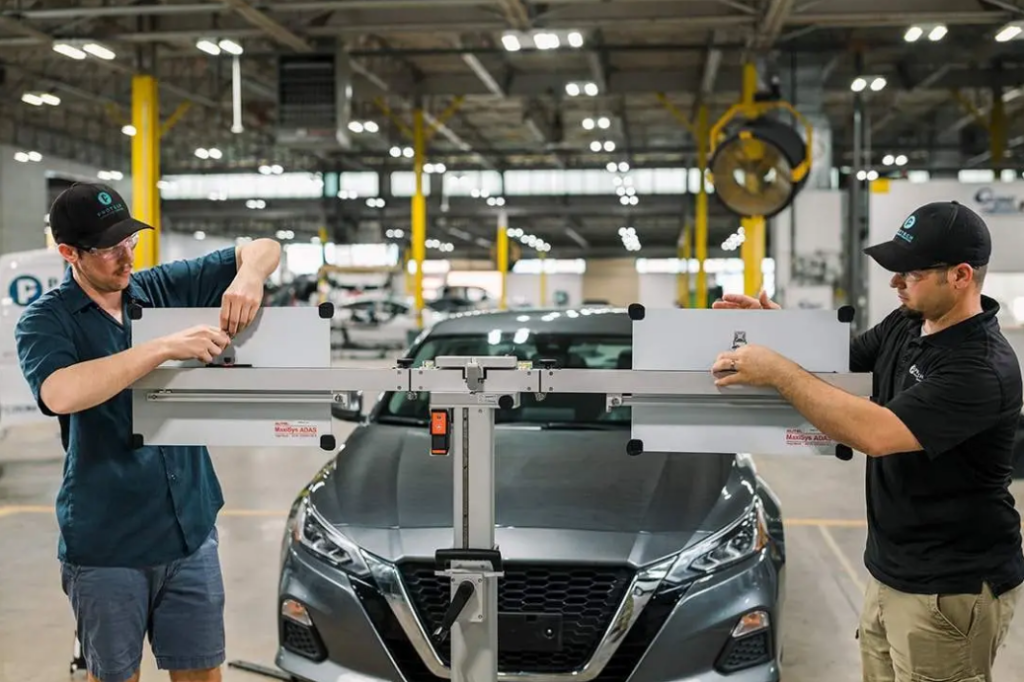
What makes ADAS repairs different from conventional collision repairs is precision. A dented fender gets straightened or replaced. A radar module that sits behind a front bumper must be removed, reinstalled, and then calibrated — sometimes to tolerances measured in fractions of a degree. If that calibration is off, the system does not work correctly. And if the repair documentation does not clearly establish that calibration was completed to factory spec, the vehicle’s history report carries a permanent asterisk.
Common ADAS Components Damaged in Collisions
Understanding which systems are most frequently affected helps explain why repair costs in modern vehicles have climbed so sharply — and why the residual value hit can be significant even after a moderate impact.
| ADAS Component | Typical Location | Collision Risk | Calibration Required |
|---|---|---|---|
| Forward collision radar | Front grille / bumper | Very high | Yes — dynamic |
| Front-facing camera | Windshield / rearview mirror | High (any windshield work) | Yes — static and dynamic |
| Blind spot sensors | Rear quarter panels / bumper | High (rear impacts) | Yes |
| Rear cross-traffic alert | Rear bumper | High (rear impacts) | Yes |
| Lane departure camera | Windshield / side mirrors | Moderate | Yes — static |
| Parking sensors | Front and rear bumpers | Very high | Sometimes |
Calibration requirements vary by vehicle make, model year, and repair scope. Always confirm with the repairing shop whether static, dynamic, or both calibration types were performed and documented.
The Diminished Value Problem with ADAS Repairs
Why Buyers Pay Less for ADAS-Repaired Vehicles
When a private buyer or dealer pulls a vehicle history report on a car that has had ADAS components repaired, they see several things that raise concern. They see the collision. They see repair costs that include electronic calibration line items. And they start asking questions that have no easy answers: Was the calibration done correctly? Was OEM equipment used or aftermarket? Is the radar still reading accurately at speed?
These are not irrational questions. A forward collision system that was improperly calibrated after repair may still function most of the time. The problem is that nobody can tell by looking at it. That uncertainty has a price, and the market discounts the vehicle accordingly. A buyer who has the choice between two otherwise identical vehicles will pay less for the one with ADAS repair history — or walk away entirely and buy the cleaner one.
The core issue: ADAS repairs introduce a layer of uncertainty that purely cosmetic or even structural repairs do not. Buyers cannot verify calibration quality at a glance. That invisible risk shows up as a real dollar discount at the point of sale, which is exactly what diminished value measures.
The Repair Cost Signal That Works Against You
High repair costs on a vehicle history report are a double signal to the market. First, they indicate the collision was serious enough to involve expensive components. Second, with ADAS specifically, they tell the next buyer that safety-critical electronic systems were disturbed. A $7,000 repair that includes a front radar module replacement and calibration reads very differently to a buyer than a $7,000 repair that was purely cosmetic sheet metal work.
This is why ADAS involvement tends to amplify diminished value beyond what the repair cost alone would suggest. The stigma is not proportional only to money spent — it is proportional to buyer confidence in the vehicle’s safety systems going forward. And that confidence, once disrupted by a history report showing electronic calibration work, is difficult to fully restore.
For a broader look at how repair history translates into market value loss, our analysis of 2025 car value depreciation in Georgia covers the key drivers in detail.
How Georgia Law Applies to ADAS-Related Diminished Value
Georgia is one of the better states in the country for pursuing a diminished value claim. The law allows you to seek compensation for the loss in market value your vehicle has suffered as a result of a not-at-fault accident, and that applies to ADAS repairs the same as it does to any other type of collision damage. The at-fault party’s liability insurance is responsible for making you whole — and “whole” includes the gap between what your vehicle was worth before the accident and what it is worth now, fully repaired.
The relevant legal framework and what Georgia drivers are entitled to pursue is covered in detail in our guide to Georgia’s diminished value laws. The short version: if you were not at fault and your car was repaired — including ADAS components — you have a legitimate basis for a claim.
Why the 17c Formula Undervalues ADAS-Related DV
Insurance companies frequently try to apply the 17c formula when calculating diminished value. This formula caps the maximum DV at 10% of pre-accident value and then applies a series of multipliers that grind the number down further based on damage severity and mileage. The problem with applying this to an ADAS-related claim is that it completely ignores the technology-specific buyer skepticism that those repairs generate.
The 17c formula was not designed for vehicles with integrated safety electronics. It treats all repairs roughly the same way. A market-based appraisal, by contrast, accounts for the specific stigma that ADAS repair history creates — including the fact that buyers in the current market are increasingly aware of these systems and actively ask about them. Our breakdown of why the 17c formula is not fair explains the full picture.
What an Independent Appraiser Looks at in ADAS Repair Cases
When a professional appraiser evaluates a vehicle with ADAS repair history for a diminished value claim, the analysis goes beyond the standard checklist. These are the key elements that drive the assessment in technology-heavy repairs:
- Which specific ADAS components were involved. A forward collision radar replacement carries more market stigma than a parking sensor swap. The appraiser maps the repair to buyer perception in the current market.
- Whether calibration was documented properly. A repair that includes calibration but lacks documentation is almost as problematic as one that skipped calibration entirely. Buyers cannot verify what they cannot see on paper.
- OEM versus aftermarket parts. Original manufacturer components carry more buyer confidence than aftermarket alternatives. If the repair used non-OEM parts for safety-critical systems, that adds to the stigma and affects the appraisal accordingly.
- The vehicle segment and its typical buyer. A buyer purchasing a $55,000 SUV with full ADAS suite is more sensitive to electronic repair history than a buyer looking at a $14,000 economy car. The appraiser factors in market segment expectations.
- Comparable sales data for similar vehicles with and without ADAS repair history. The value gap between clean-history and repaired examples in the same market establishes the actual dollar loss — not a formula, but real transaction data.
Not sure whether your situation qualifies for a claim? Our eligibility guide walks through the requirements: find out if you qualify for a diminished value claim in Georgia.
The Vehicles Most Affected by ADAS Diminished Value in Georgia
Not every vehicle with ADAS carries the same diminished value exposure after a collision. The combination of technology density, vehicle segment, and buyer expectations determines how much market value is lost when ADAS repairs show up on a history report.
Vehicles that tend to suffer the most significant ADAS-related DV in Georgia’s market include late-model trucks and SUVs in the $35,000 to $65,000 range, luxury sedans from European and Japanese manufacturers, and any vehicle where ADAS is a selling point in the model’s marketing. Buyers for these vehicles arrive informed, ask specific questions about safety system history, and discount accordingly when the answers are not clean.
Electric and hybrid vehicles carry a particular exposure because their sensor-heavy architecture means almost any meaningful collision will involve some form of ADAS component. The depreciation picture for these vehicles is already complex, as covered in our analysis of how 2025 market conditions are reshaping vehicle values in Georgia, and ADAS repair history adds another layer of buyer resistance on top of the existing EV-specific concerns.
What Georgia Drivers Should Do After a Collision Involving ADAS
- Request itemized documentation from the repair shop. You want a written record of every ADAS component that was touched, replaced, or calibrated — including the calibration method used and the final readings. This documentation supports your appraisal and gives a future buyer something concrete to review.
- Do not assume the repair cost is the ceiling of your loss. The repair bill covers what it cost to fix the car. It does not cover what you lost in market value because of what the repairs represent to a future buyer. Those are separate numbers and both matter.
- Get an independent appraisal before settling with the insurer. Once you accept a settlement and sign a release, the diminished value claim is closed. An independent appraiser establishes what you are actually owed — including the ADAS-specific stigma — before you give up the right to pursue it.
- Push back on any offer built around the 17c formula. That formula was not designed for modern vehicles with integrated electronics and it will undervalue your claim. A market-based appraisal from a qualified professional is the correct tool for ADAS repair cases.
- Act within Georgia’s four-year window, but do not wait longer than necessary. Current market data is more useful than historical reconstruction. If you file while the ADAS repair is recent, the connection between the event and the value loss is direct and straightforward to document.
The insurance company’s job is to close your claim as cheaply as possible. That means their offer is almost certainly not accounting for the specific market discount that ADAS repair history creates. An independent appraiser’s job is to establish what that discount actually is — and give you the documentation to demand it.
Your ADAS Repairs Cost More Than the Insurer Is Admitting
A collision involving safety electronics leaves a mark on your vehicle’s history that a paint job cannot erase. Get an independent appraisal and find out what your diminished value claim is actually worth.
ADAS Repairs, Collision History & Diminished Value in Georgia
Save this guide as a PDF to reference during your claim or share with your attorney.
Frequently Asked Questions
Does ADAS repair history always reduce a vehicle’s resale value in Georgia?
Not always at the same rate, but in practice, yes. Any collision that involved ADAS components will appear on the vehicle’s history report and raise questions for future buyers. The degree of value loss depends on which systems were repaired, how well the calibration was documented, whether OEM parts were used, and the vehicle segment. Higher-end vehicles with more sophisticated ADAS suites typically suffer more significant market value drops than economy vehicles.
Can I claim diminished value in Georgia if the only damage was to ADAS sensors and no body panels were replaced?
Yes. Georgia’s diminished value law is not limited to visible structural or cosmetic damage. If your vehicle sustained a collision that required ADAS component repair or replacement, and you were not at fault, you have a basis for a claim. The loss in market value caused by the repair history — including electronic components — is compensable. An independent appraiser can document the specific impact on your vehicle’s value.
My repair shop said the ADAS calibration was completed successfully. Does that eliminate my diminished value claim?
No. A successful calibration means the systems are functioning correctly after the repair. It does not erase the fact that those systems were involved in a collision and required repair. The vehicle history report will still show the event, and future buyers will still factor that into their offer. Diminished value measures market perception, not mechanical function — and the market discounts vehicles with ADAS repair history even when the repair was done correctly.
How do I know if my vehicle’s collision involved ADAS components?
Start with the itemized repair invoice from the body shop. Look for line items referencing radar, camera, sensor, calibration, or any system with an acronym like ACC (adaptive cruise control), LKA (lane keep assist), BSM (blind spot monitoring), or FCW (forward collision warning). If the repair involved the front bumper, rear bumper, windshield, or side mirrors on a vehicle built after 2018, there is a strong likelihood ADAS components were part of the repair scope.
Will the insurer’s adjuster account for ADAS-related stigma in their diminished value offer?
Almost certainly not adequately. Adjusters working with formula-based tools like the 17c method do not have a mechanism for capturing technology-specific buyer skepticism. Their calculation treats ADAS repairs like any other repair cost input. An independent appraiser using real market transaction data will produce a number that reflects what buyers actually do when they see ADAS repair history on a vehicle — and that number is consistently higher than what insurers offer on the first pass.