You filed a diminished value claim in Georgia, the insurance adjuster reviewed it, and now there is a number on the table. Maybe it is $400. Maybe it is $900. Maybe they are calling it a “final offer.” Whatever the amount, the pressure to close the claim and move on is real. But before you sign anything, you need to understand what that first offer actually represents and why accepting it without pushback is almost always a mistake.
What the First Offer Actually Tells You
Insurance companies do not start negotiations at fair value. That is not how the process works. The first offer in a diminished value claim is almost always calculated using the industry’s most conservative formula possible, or based on a desk review with limited data about your specific vehicle and the current Georgia market.
In many cases, the adjuster will apply the 17c formula, which was originally developed as an internal tool for State Farm and has since been widely adopted by insurers across Georgia. The problem is that this formula caps diminished value at 10% of the vehicle’s pre-loss value, applies a series of multipliers that further reduce that number, and was never designed to reflect actual buyer behavior or real market loss. It was designed to limit payouts.
When an insurer hands you an offer based on this formula, they are not telling you what your car lost in value. They are telling you the minimum they believe they can justify paying.
Why Georgia Drivers Are in a Stronger Position Than They Realize
Georgia is one of the most favorable states in the country for diminished value claims. The landmark State Farm Mutual Automobile Insurance Co. v. Mabry case established that Georgia drivers have the right to file third-party diminished value claims after a not-at-fault accident. That legal foundation matters because it means insurers cannot simply deny these claims outright. They have to engage.
That engagement typically starts with a lowball offer. And most drivers, not knowing what their claim is actually worth, accept it and walk away. According to Georgia’s current diminished value laws, you are entitled to the actual market loss your vehicle suffered, which in most cases far exceeds what a formula-driven offer reflects.
Key point: Accepting the first offer and signing a release of liability closes your claim permanently. Once you accept, there is no going back, even if you later discover the offer was well below what your vehicle actually lost in market value.
How Much Is an Insurance First Offer Usually Off By?
There is no universal answer because diminished value depends heavily on the vehicle, the extent of damage, the quality of repairs, and what the current market will bear. But based on real claim outcomes across Georgia, the gap between a first offer and a properly supported appraisal figure is often significant.
| Scenario | Typical First Offer | Actual Market Loss |
|---|---|---|
| Midsize sedan, moderate damage | $350 to $600 | $1,200 to $2,500+ |
| Luxury vehicle, structural damage | $800 to $1,500 | $4,000 to $9,000+ |
| Late-model truck, minor repairs | $200 to $400 | $900 to $2,000+ |
| EV or hybrid, any damage | $500 to $900 | $2,500 to $7,000+ |
These figures are illustrative based on general market observations and claim outcomes. Actual diminished value varies by vehicle, damage severity, and current market conditions.
The pattern is consistent: formula-based offers rarely reflect what real buyers in the Atlanta area and across Georgia actually pay less for a vehicle with a reported accident history. The current state of the used car market in Georgia means buyers have more options and are more price-sensitive than they were two years ago, which makes accident history an even bigger liability at resale.
What Insurers Say to Push You Toward Accepting
Adjusters are trained to close claims efficiently. Some of the most common tactics used to pressure Georgia drivers into accepting the first diminished value offer include:
- “This is based on the industry-standard formula.” The 17c formula is an insurer-created tool, not a legal standard. Georgia courts have not mandated its use, and it consistently undervalues real market loss.
- “The repairs restored your vehicle to pre-loss condition.” Repairs may restore function, but they cannot erase accident history from Carfax or AutoCheck. Buyers still discount the price, and that gap is your diminished value.
- “Your car is too old to have significant diminished value.” Age and mileage reduce a vehicle’s base value, but many older vehicles still carry meaningful diminished value, particularly trucks, SUVs, and vehicles in strong demand in Georgia’s used car market.
- “This offer is only good for a limited time.” Artificial urgency is a negotiation tactic. Georgia’s statute of limitations gives you time to get a proper appraisal before committing to anything.
- “We’ve already been generous.” Without an independent appraisal to compare against, you have no way to know whether the offer is generous, fair, or significantly below market. That uncertainty is what the insurer is counting on.
What You Should Do Before Responding to Any Offer
The single most important step before responding to a diminished value offer in Georgia is getting an independent appraisal from a qualified professional who works for you, not the insurer.
A properly prepared diminished value appraisal documents the actual market impact of the accident on your vehicle’s resale value. It considers your specific car, the real extent of damage, the quality and type of repairs, current buyer behavior in Georgia’s used vehicle market, and comparable sales data. It is a defensible document you can use in direct negotiations or, if necessary, in arbitration or court.
Once you have that number in hand, you can make an informed decision. If the insurer’s offer is close, you might decide to accept with some additional negotiation. If the gap is significant, you now have documented evidence to support a counteroffer or escalate the claim.
Steps to Take When You Receive a First Offer
- Do not sign or accept anything until you have an independent appraisal.
- Request the insurer’s complete calculation or methodology in writing.
- Document the damage, repair records, and the original repair estimate.
- Order a professional diminished value appraisal from a licensed Georgia appraiser.
- Submit your appraisal as a formal counteroffer with a written demand letter.
- Escalate through the insurer’s internal review process or contact the Georgia Department of Insurance if the claim is handled in bad faith.
The Role of an Independent Appraisal in Negotiation
An insurer’s internal adjuster is employed by the company that is paying the claim. Their job is to close files, not maximize your recovery. An independent appraiser has no financial incentive to undervalue your vehicle’s loss. Their report reflects what the market actually shows.
When you submit a professional appraisal alongside a written counteroffer, the dynamic of the negotiation changes. The insurer can no longer rely on vague references to “industry standard” methods. They have to address a specific, documented valuation with real market data behind it.
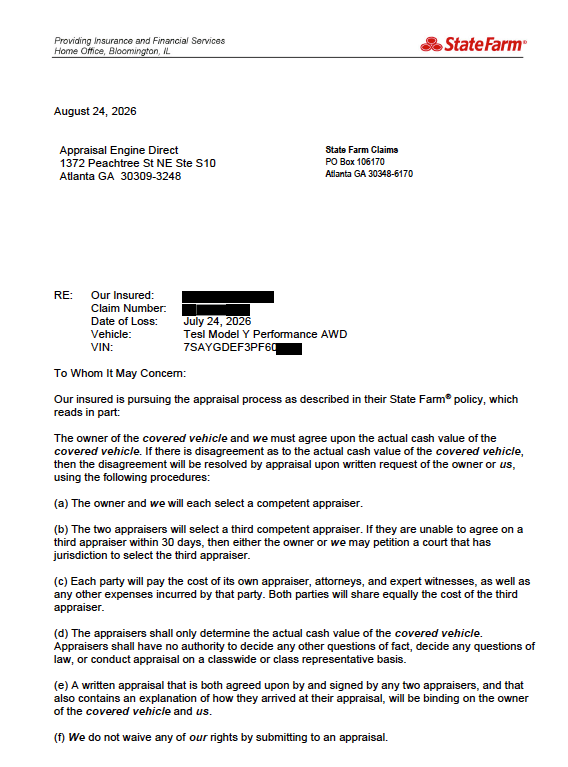
This does not mean every claim gets resolved in your favor, or that the process is without friction. But Georgia drivers who come to the table with a credible independent appraisal almost always do better than those who accept the first offer without question. If you are unsure whether your vehicle even qualifies, the qualification checklist for diminished value in Georgia is a good place to start.
Worth noting: Even if the insurer disputes your appraisal, having professional documentation strengthens your position in every subsequent step of the process, from internal appeals to small claims court. Georgia’s small claims limit allows many diminished value disputes to be resolved without hiring an attorney.
When Accepting the First Offer Might Actually Make Sense
To be fair, there are situations where the first offer is reasonable and accepting it is a defensible decision.
If the damage to your vehicle was extremely minor, if the car has very high mileage or a pre-existing accident history that already suppressed its market value, or if the cost of obtaining an appraisal approaches or exceeds the likely gap between offers, then the calculus changes. Not every diminished value claim warrants a full appraisal and negotiation process.
But in the majority of cases involving late-model vehicles, moderate to significant damage, or vehicles in vehicle segments that buyers scrutinize carefully at resale (luxury cars, trucks, EVs, and SUVs), the first offer is very likely to leave money on the table. The only way to know for certain is to have your vehicle’s actual market loss documented by someone with no stake in paying you less.
Got an Offer from Your Insurer? Find Out What Your Claim Is Really Worth.
Before you accept anything, get a free diminished value estimate from Georgia’s most experienced independent appraisers. No obligation. No pressure. Get Your Free DV Estimate
Download this article as a PDF, save it for reference or share with someone navigating a diminished value claim in Georgia.
Frequently Asked Questions
Can I negotiate a diminished value offer in Georgia after I’ve already received one?
Yes, as long as you have not signed a release of claims or accepted payment with a settlement agreement attached. Until that document is signed, the claim remains open and negotiable. Getting an independent appraisal at this stage gives you a documented basis for a counteroffer.
What if I already accepted the first offer? Is there anything I can do?
Once you have signed a full release and accepted the settlement, the claim is typically closed permanently. This is why it is critical to get an appraisal before accepting. In rare cases involving clear bad faith, legal remedies may exist, but this is a complicated path and usually costly. Prevention is always the better option.
How long does a Georgia driver have to file a diminished value claim?
Georgia’s statute of limitations for property damage claims is generally four years from the date of the accident. However, this does not mean waiting is wise. Evidence is clearest shortly after the accident and repairs, and some insurers will complicate late claims with additional documentation requests. Filing promptly is always the better approach.
Does the 17c formula have any legal standing in Georgia?
No. The 17c formula is an internal insurer tool that has no mandatory legal status under Georgia law. Georgia courts have not endorsed it as the definitive method for calculating diminished value. Insurers use it because it limits payouts, not because the law requires it. An independent appraisal that reflects actual market data is a legitimate and more accurate alternative.
Is it worth getting a professional appraisal if the insurer’s offer seems reasonable?
That depends on the specifics of your vehicle and damage. The cost of a professional appraisal should be weighed against the potential gap between the offer and your actual market loss. For late-model vehicles, luxury cars, EVs, or vehicles with significant damage, the math usually favors getting an appraisal. A free estimate is a logical first step before committing to either direction.