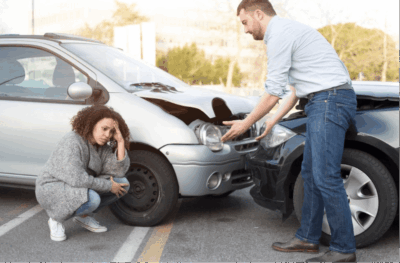
You come back to your car in a parking lot and find a dent, a scraped bumper, or a caved-in door panel. Maybe the other driver left a note. Maybe they did not. Either way, your first thought is the repair estimate, which is completely understandable. But there is a second financial loss happening at the same time that nobody at the auto shop or the insurance company is going to raise on your behalf: your vehicle’s market value just dropped permanently. Even after a flawless repair, that accident is now part of your car’s history. In Georgia, the at-fault driver’s insurer owes you compensation for that loss, whether the accident happened at highway speed or at 4 miles per hour in a Kroger parking lot.
Does Diminished Value Apply to Parking Lot Accidents in Georgia?
Yes. The legal basis for diminished value claims in Georgia does not require a high-speed collision or significant structural damage. What it requires is that another driver was at fault, that an insurance claim was filed for the damage, and that your vehicle still has meaningful market value. Speed and location are irrelevant to the legal right. What matters to the market is whether your car now carries an accident history, and that history appears in Carfax and AutoCheck reports the moment an insurance claim is processed.
Georgia’s diminished value law, grounded in the State Farm Mutual Automobile Insurance Co. v. Mabry decision, establishes that the at-fault driver’s insurer is responsible for your full property damage, which includes the market value loss that accident history creates. A $2,000 bumper repair on a $38,000 vehicle generates a Carfax entry. That entry will show up when the next buyer runs the VIN. The market will price the car lower as a result. That gap is what a diminished value claim is designed to recover.
How Fault Gets Established Without a Police Report
Police rarely respond to parking lot accidents in Georgia, particularly in private lots where their jurisdiction is limited. Without a police report, fault is not officially documented, which gives the at-fault driver’s insurer an opening to dispute liability. The documentation you gather at the scene becomes your substitute for that report.
- Get the other driver’s written acknowledgment of responsibility if possible, and photograph anything signed or written at the scene
- Request surveillance footage from the property owner or manager immediately. Most retail and grocery lot cameras overwrite within 30 to 90 days, and some systems overwrite faster
- Take photos of both vehicles showing damage patterns, positions, and the point of impact before anyone moves their car
- Collect contact information from any witnesses who saw the accident or the other driver leaving
- Exchange insurance information at the scene even if the police are not coming
If you have the other driver’s insurance information, you can file a third-party claim regardless of whether a police report exists. The insurer will conduct its own liability investigation. The stronger your documentation, the less room they have to dispute fault.
What Happens If the Other Driver Disputes Fault
Without a police report, a disputed parking lot claim often comes down to independent evidence. Surveillance footage is frequently the deciding factor. Damage patterns also matter: a comparison of where each vehicle shows impact can support or undermine each party’s account. If you cannot access footage and fault is genuinely disputed, the claim may require escalation, but a well-documented file still gives you more leverage than an undocumented one.
What Parking Lot Damage Actually Does to Your Vehicle’s Market Value
The financial impact of parking lot accident history depends on the vehicle’s age, its pre-accident value, the nature of the damage, and how the market treats that segment in Georgia. Here are typical ranges based on independent appraisal data:
| Damage Type | Typical Market Value Reduction |
|---|---|
| Minor paint and bumper damage, no structural involvement | 3% to 8% |
| Door panel damage, PDR repair | 5% to 10% |
| Rear quarter panel or fender replacement | 8% to 15% |
| Multiple panel repairs on a newer or luxury vehicle | 12% to 20% |
The percentage is higher on newer vehicles, luxury segments, and models where buyers have abundant clean-title alternatives. On a $42,000 vehicle with a 10% diminished value reduction, that is $4,200 of market loss that the next buyer will capture in negotiation, whether the original damage looked minor or not.
Hit-and-Run in a Parking Lot: Your Options in Georgia
If the other driver left without providing any contact or insurance information, your options narrow considerably. Without an identifiable at-fault driver, you cannot file a third-party diminished value claim. You do not know who their insurer is.
Your practical options in a hit-and-run parking lot situation include filing under your own collision coverage for repairs (collision does not cover diminished value in the vast majority of Georgia policies), filing a police report even after the fact to create a documented record, and checking your declarations page for uninsured motorist property damage coverage. Georgia law requires UM coverage for bodily injury but does not mandate UMPD coverage for property damage in hit-and-run situations. Most Georgia policies do not include it by default.
When You Have the Other Driver’s Information
If you exchanged information at the scene or identified the at-fault driver, your path forward is the same as any other Georgia diminished value claim. You file a third-party property damage claim against their insurer. The DV claim is a separate component from the repair payment, and Georgia law requires the at-fault insurer to address both.
The insurer will not raise the subject of diminished value on their own. You have to file the claim and support it with documentation. Reviewing what documents support a strong Georgia DV claim before you engage with the adjuster will save significant time. For parking lot claims specifically, supplement the standard file with scene photos, any surveillance footage you obtained, and witness contact information.
If the insurer responds with a low formula-based offer or a denial, those are negotiating positions, not final answers. Our guide on what to do when your Georgia DV claim is denied covers the escalation path in full.
Why Even Minor Parking Lot Damage Warrants an Appraisal
Most Georgia drivers assume parking lot damage is too minor to warrant a formal diminished value appraisal. The insurer’s adjuster will almost certainly make that argument. But the appraisal is not based on what you think the damage was worth to repair. It is based on what the market actually does to your vehicle’s resale value after it carries an accident history.
A certified independent appraiser compares your vehicle to clean-title equivalents actively selling in the Georgia market and documents the price gap that accident history creates. That number is frequently larger than most drivers expect, particularly on newer vehicles, higher trim levels, and models with strong demand in the Georgia market.
Checking whether your situation qualifies for a Georgia DV claim is the right first step. If the vehicle is relatively new, carries low mileage, and the market supports strong resale value for your make and model, the claim is likely worth pursuing. For a complete view of the legal framework that applies to parking lot accidents exactly as it does to highway collisions, see our overview of Georgia’s diminished value laws.
Your Car Was Hit in a Parking Lot. Find Out What You Are Owed.
Get a free estimate from Georgia’s most trusted diminished value appraisers. Send us your repair documents and vehicle details and we will tell you exactly what your claim is worth.
Download the PDF version of this guide — Parking Lot Accidents and Diminished Value in Georgia: What You Are Owed After a Hit in the Lot
Frequently Asked Questions
Does diminished value apply to minor parking lot accidents in Georgia?
Yes. The legal right to diminished value in Georgia is not tied to damage severity. What matters is that another driver was at fault, that an insurance claim was filed, and that your vehicle still has meaningful market value. A minor bumper repair that generates a Carfax entry still reduces what buyers will pay for your car. The market does not distinguish between minor and major damage in the accident history record.
What if the driver who hit my car left without leaving their information?
A hit-and-run without an identifiable at-fault driver eliminates your third-party DV claim option. File a police report to document the incident, then check your declarations page for uninsured motorist property damage coverage. Most Georgia policies do not include UMPD by default. If you are later able to identify the driver through surveillance footage or a witness, your third-party claim becomes viable again.
I do not have a police report from the parking lot. Can I still file a diminished value claim?
Yes. A police report is strong supporting documentation but not a legal requirement to file a diminished value claim in Georgia. Scene photos, surveillance footage, witness statements, and the other driver’s insurance information can substitute for a police report in many cases. The insurer will conduct its own liability investigation. Your documentation is what shapes its outcome.
How much diminished value can I expect from a parking lot accident in Georgia?
It depends on the vehicle’s age, value, and the nature of the damage. Single-panel repairs on standard vehicles typically produce diminished value in the 5% to 12% range. Multiple panel repairs on newer or luxury vehicles can produce reductions of 12% to 20%. On a $40,000 vehicle, that range represents $2,000 to $8,000 in recoverable market loss. A free pre-evaluation from an independent appraiser gives you a realistic number before you decide how to proceed.
Does my own insurance cover diminished value from a parking lot hit-and-run?
Standard Georgia collision coverage does not include diminished value. Uninsured motorist coverage is required in Georgia but applies to bodily injury in most policies. Uninsured motorist property damage is a separate endorsement that some Georgia policies carry. Check your declarations page or call your agent to confirm what your policy actually includes before assuming you have no options.
Can I file a DV claim if the parking lot accident happened on private property in Georgia?
Yes. The location of the accident, whether a private parking lot, a shopping center, or a public road, does not affect your right to a diminished value claim. What matters is fault and the resulting damage to your vehicle’s market value. Private property accidents simply require more attention to documentation since police reports are less common in those settings.