For years, many drivers treated diminished value as something abstract—something difficult to prove or even notice. But in the 2026 auto market, that’s changing.
With pricing becoming more stable and predictable, the financial impact of an accident is no longer hidden behind market volatility. Instead, it’s becoming easier to see—and harder to ignore.
And when you look at real market data, especially insights from Black Book, one thing becomes clear: vehicles with accident history are consistently valued lower, even when repairs are done right.
What the 2026 Market Is Telling Us
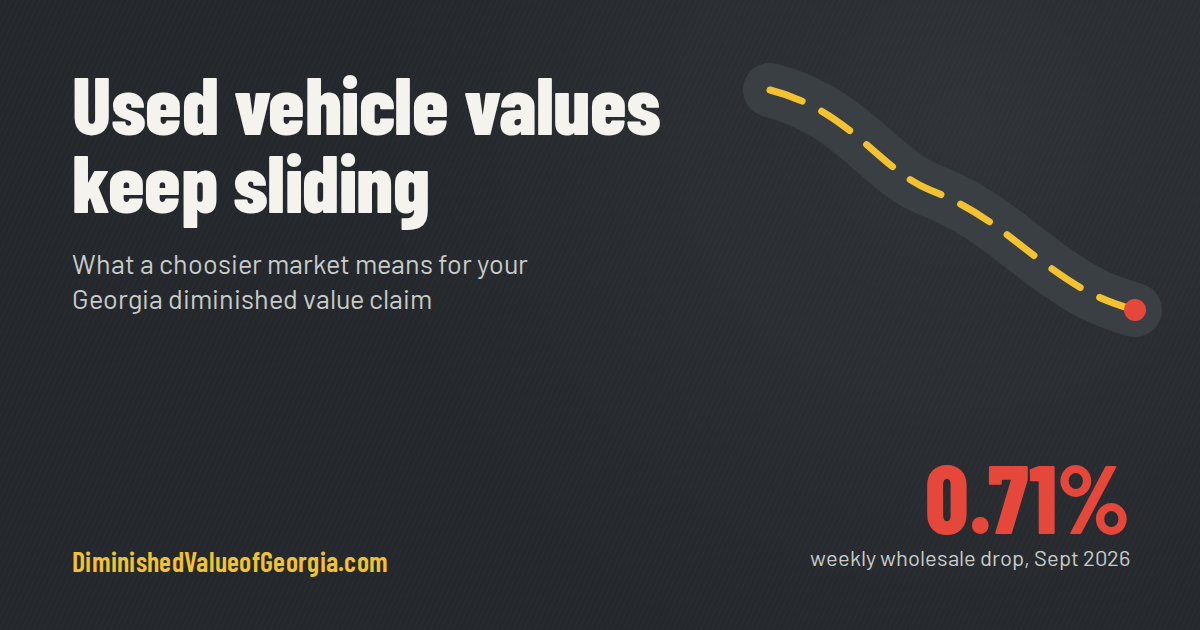
Unlike the past few years, where prices were swinging up and down, the current market has settled into more traditional depreciation patterns. Vehicles are losing value at a steadier pace, which makes any additional loss stand out more clearly.
That’s where accident history comes in.
According to Black Book Market Insights, buyers are not just looking at condition anymore—they’re looking at history. And once a vehicle shows damage on record, it changes how it’s perceived.
Even if everything has been repaired professionally, that record doesn’t go away. And neither does the discount that comes with it.
Why a Stable Market Makes Losses More Visible
When prices were unpredictable, it was easy to blame market swings for changes in value. Now, that excuse doesn’t hold.
In a stable market, differences become easier to spot. Two similar vehicles—same year, same mileage—can have noticeably different prices if one has an accident on its record.
That gap? That’s diminished value.
Our breakdown of used car price drops in Georgia shows how even small condition differences are now playing a bigger role in resale pricing.
What the Numbers Actually Look Like
While every case is different, market behavior tends to follow consistent patterns. Here’s how accident history typically affects resale value in today’s market:
| Condition | Buyer Reaction | Typical Value Impact |
|---|---|---|
| Clean history | High confidence | Full market value |
| Minor accident | Slight hesitation | -5% to -15% |
| Moderate damage | Negotiation leverage | -10% to -25% |
| Structural damage | Limited interest | -20% to -40% |
These aren’t just theoretical numbers—they reflect how buyers actually behave.
Where Insurance Valuations Fall Short
Here’s where things start to get frustrating for many drivers.
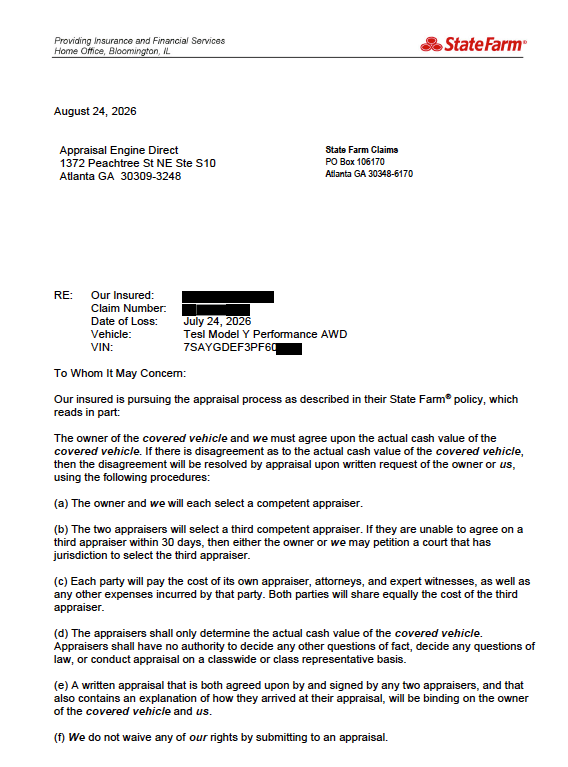
Insurance companies don’t evaluate value the same way buyers do. They rely on systems, formulas, and comparable listings—but those don’t always capture real-world perception.
As explained in 2026 auto market trends and vehicle appraisals, valuation models often lag behind actual market behavior.
So while the market is clearly discounting accident vehicles, insurance calculations may not fully reflect that gap.
Why Even Minor Damage Still Matters
A common misconception is that only major accidents impact value. But today’s buyers don’t always make that distinction.
For many, the question isn’t “how bad was the damage?”—it’s simply “has this car been in an accident?”
That’s why even small incidents can lead to real financial loss, as shown in minor damage diminished value in Georgia.
The record matters more than the repair.
Why This Matters for Georgia Drivers
Georgia is one of the few states where diminished value claims are recognized, which gives drivers a real opportunity to recover this loss.
But recognition doesn’t guarantee accuracy.
If you rely only on insurance calculations, you may end up accepting a number that doesn’t match what the market is actually doing.
Understanding real pricing behavior—and using it to support your claim—is what makes the difference.
Final Thoughts: Data Doesn’t Lie, But Systems Can Lag
The 2026 auto market has made one thing very clear: diminished value isn’t theoretical anymore. It’s measurable, visible, and backed by real market behavior.
Black Book data doesn’t just confirm that vehicles lose value after an accident—it shows how consistently that happens.
And if you understand that, you’re in a much stronger position when it comes to your claim.
Download the Printable Version of This Article
If you want a printable version of this article to reference during your claim process, download the full PDF below.
Download the PDF Version of This Article
Diminished Value FAQs in Georgia
Does accident history always reduce car value?
Yes. Even minor accidents can affect buyer perception and reduce resale value.
Why is diminished value more noticeable in 2026?
Because the market is more stable, making value differences easier to identify.
Do insurance companies use real market data?
They use data, but it may not fully reflect current buyer behavior.
Can I use market data to support my claim?
Yes. Market-based evidence can strengthen your position significantly.